
I had to sign an NDA before Dolby would tell me what I was about to hear.
Fourteen years and 1,400+ mixes later, I can hand you the workflow in five modules.
Build a complete technical and creative Dolby Atmos workflow — from session setup to a release-ready immersive master — without piecing it together from disconnected tutorials or rebuilding your studio before you begin.
Build your Atmos workflowImmediate access · Self-paced · Templates included · 7-day guarantee
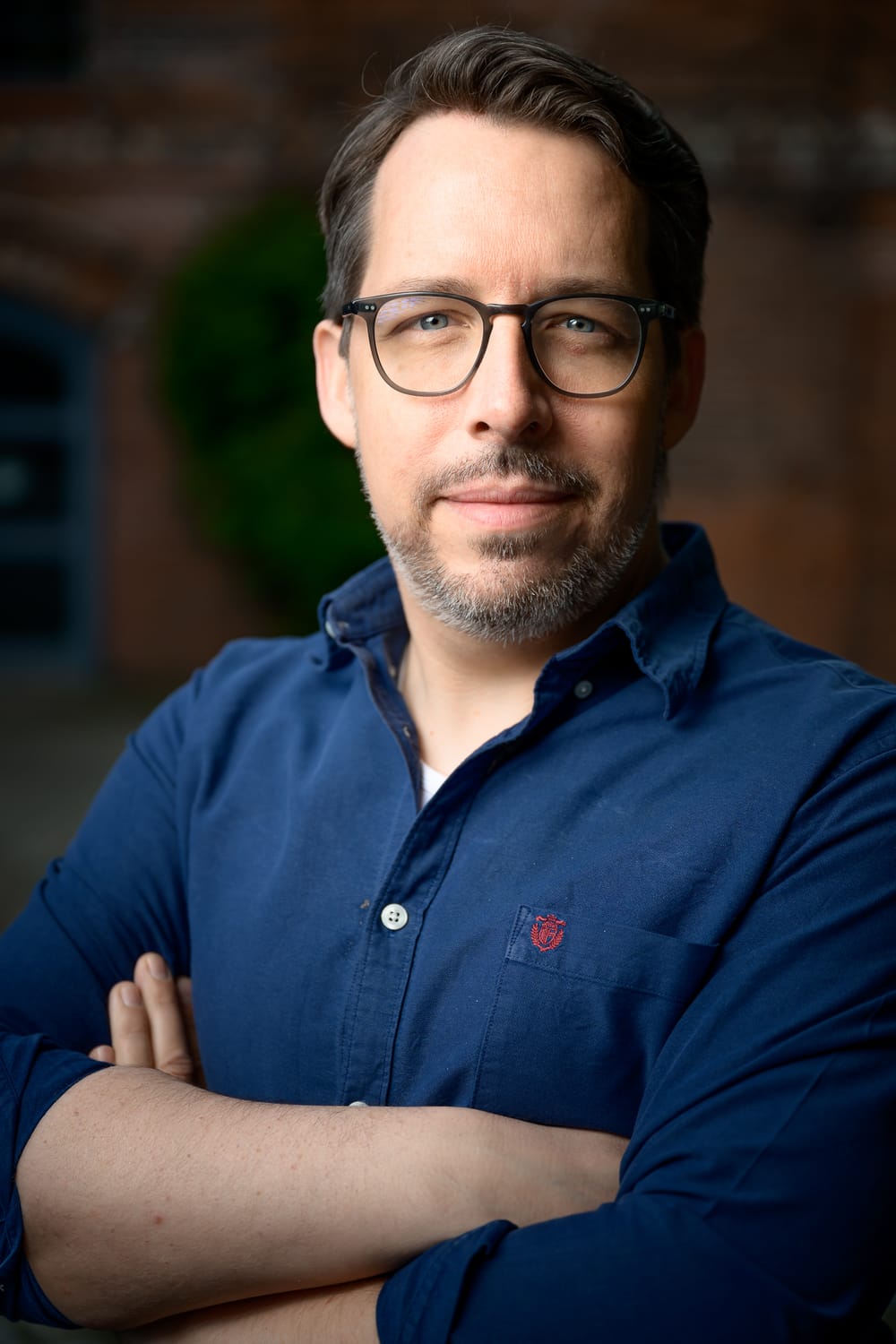
Eric Horstmann · Berlin
Immersive mixes for
ModeratRobin SchulzSevdalizaKitschkriegRodriguez Jr.Dubfire
You already know how to mix.
You know your DAW. You understand signal flow. You know how to shape a song, solve technical problems, and deliver a professional stereo mix.
Then a client asks whether you can deliver it in Dolby Atmos — and the confidence you normally have starts to disappear.
Maybe you've already watched tutorials about beds, objects, routing, Renderers, and binaural settings. You understand parts of it. But you don't have a workflow you would trust on a real client project.
- What if my Atmos mix doesn't translate?
- Am I really ready to charge clients for this?
- Who can actually listen to it?
- Do I need to rebuild my entire studio?
So you outsource the project. Or turn it down. Or tell the client Atmos probably isn't worth it.
Not because you aren't a capable engineer. And not because your years of experience suddenly mean nothing.
You don't need to relearn audio engineering. You need a workflow that shows you how the skills you already have translate into immersive music.
More tutorials won't give you a workflow.
One video shows you a particular session. Another explains one piece of software. Another demonstrates how one engineer uses beds, objects, or a specific plugin. Many contain valuable information.
What they rarely give you is the structure connecting everything.
So you open your own session, put on your headphones, and start experimenting. You move sounds around until the mix feels immersive. You adjust binaural settings. You copy techniques from other engineers' sessions. And you're still working through trial and error — not knowing whether the session is technically robust, whether the downmix will hold together, or whether the deliverables will pass professional quality control.
Knowing how to move an object is not the same as knowing why, when, or where to move it.
This isn't a talent problem.
Nobody handed you a structure. The format arrived, the tutorials multiplied, and every one of them assumed you already had the framework they were slotting into. You've been asked to assemble a professional workflow out of fragments — and then judged on whether the result is client-ready.
And here's what it costs if nothing changes.
The next Atmos request goes to someone else. That's survivable once.
But the engineer who takes that single track is now the engineer the label calls for the next album — including the stereo. Atmos rarely arrives as an isolated deliverable. It arrives attached to work you already have.
Every request you pass on doesn't just cost you that project. It quietly moves you out of the conversation for the ones that follow.
Build your Atmos workflowMy Atmos work began before there was a workflow to follow.
Dolby Atmos wasn't a trend. It wasn't even publicly available.
I was working as the CTO of a post-production company and as a re-recording mixer. I already knew the people at Dolby through my work when they contacted me about a new audio format they were developing.
There was one condition before they could tell me anything: I had to sign an NDA.
My boss and I were then invited to Dolby's European headquarters in England. That was where I heard Dolby Atmos for the first time.
My reaction wasn't analytical:
“This is incredible. We need this.”
At that point Atmos was a cinema format. Immersive music streaming wasn't part of the conversation. But I understood immediately that this could change how we create and experience sound.
We returned to Germany and began building the country's first Dolby Atmos mixing stage.
That's when the real work started.
There was no proven workflow to copy. Components you can simply order today didn't exist yet. Even finding the right mounts to position all those additional loudspeakers became a technical problem to solve.
We experimented constantly. Dolby supported us throughout, but everyone involved was still discovering what worked — technically and creatively.
During one of our first productions, there was a scene where the camera moved around an actor. We thought: why not rotate the entire orchestra with it? So we did. It was wild. The technology made it possible. Whether it was the best creative decision is another question — today I would probably mix that scene differently.
The technology shows you what is possible. Experience teaches you what actually serves the content.
When immersive music arrived on streaming platforms, two parts of my professional life finally connected: my technical experience from cinema and my work as a musician.
But music required a different way of thinking.
A song usually gives you fewer elements than a film production. That creates more freedom — and it makes every spatial decision more exposed. You can't hide behind spectacle. Every placement and movement needs a musical reason.
My early music workflow used a conventional 7.1.2 bed alongside discrete objects. That worked, but I kept running into the maximum channel width available to me in Pro Tools.
The problem wasn't that beds and objects couldn't be used together. They could. The bottleneck was building the foundation of the mix around a 7.1.2 channel structure when I wanted the spatial resolution and flexibility of a 9.1.6 environment.
So I implemented an Object-Bed workflow and adapted it to the way I wanted to work. I didn't invent the underlying concept — I refined it around my own technical requirements and creative decisions.
The first major project I completed with it was Moderat's MORE D4TA.
Since 2019 I've mixed more than 1,400 songs in Dolby Atmos.
My immersive work on Rodriguez Jr.'s Feathers and Bones received two VISION OF SOUND Awards in 2024, including the Audience Award and Best Electronic. In 2025 I received a German Songwriting Award in the Best Immersive category.
But the mixes and the awards aren't why I built the Spatial Audio Academy. The reason was the questions I kept hearing.
I've taught dozens of workshops at universities and trade shows and coached engineers individually. Again and again, experienced producers and mixing engineers asked me the same three things: how to structure an Atmos session. Which workflows actually hold up in professional productions. And once everything is technically connected — what can you creatively do with it?
The problem was never a lack of information. It was that the information was fragmented. You could watch dozens of tutorials, understand every one of them, and still not know how to take a real song from session setup to a finished, quality-controlled Atmos master.
It took me more than a decade and over 1,400 real-world mixes to develop the experience behind this process.
You don't have to start from zero.
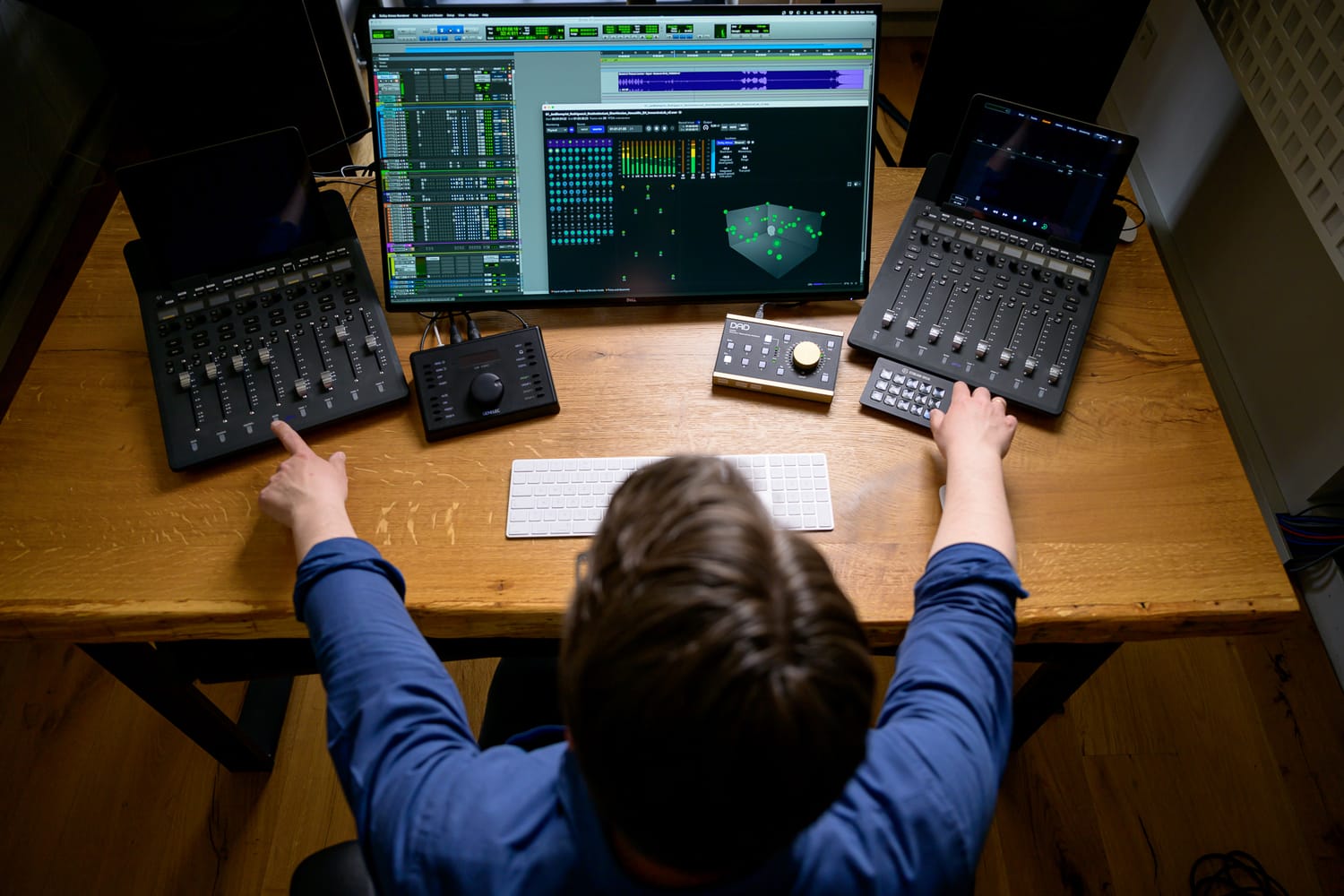
The same workflow you'll build — running on a real client session.
A 9.1.6 foundation, built from objects.
By using objects to construct the foundation of the mix, I can work in a native 9.1.6 layout without being constrained by 7.1.2 channel width.
The result is greater technical flexibility and, to my ears, a more balanced and intentional immersive mix.
You'll learn how it's constructed, why it works, and how to adapt it to your own DAW.
Master the technology — then let it disappear behind the music.
The way forward doesn't begin with buying more loudspeakers. It begins with understanding what immersive audio is actually designed to do.
Before we open a complex session, I'll help you understand the foundations: how human hearing responds to direction, how we localise sound, and why an immersive mix creates a fundamentally different experience from stereo. Once those principles make sense, the technical decisions stop feeling arbitrary.
From there, I'll show you how straightforward it is to integrate Dolby Atmos into a professional DAW workflow. You'll build the session structure and see how the Object-Bed approach creates a flexible foundation.
Then comes the moment when it connects. The routing works. The Renderer works. You understand what you're hearing and how to evaluate whether the mix translates. The technology moves into the background.
Not to make you think about technology forever — but to give you enough technical confidence that you're free to make creative decisions.
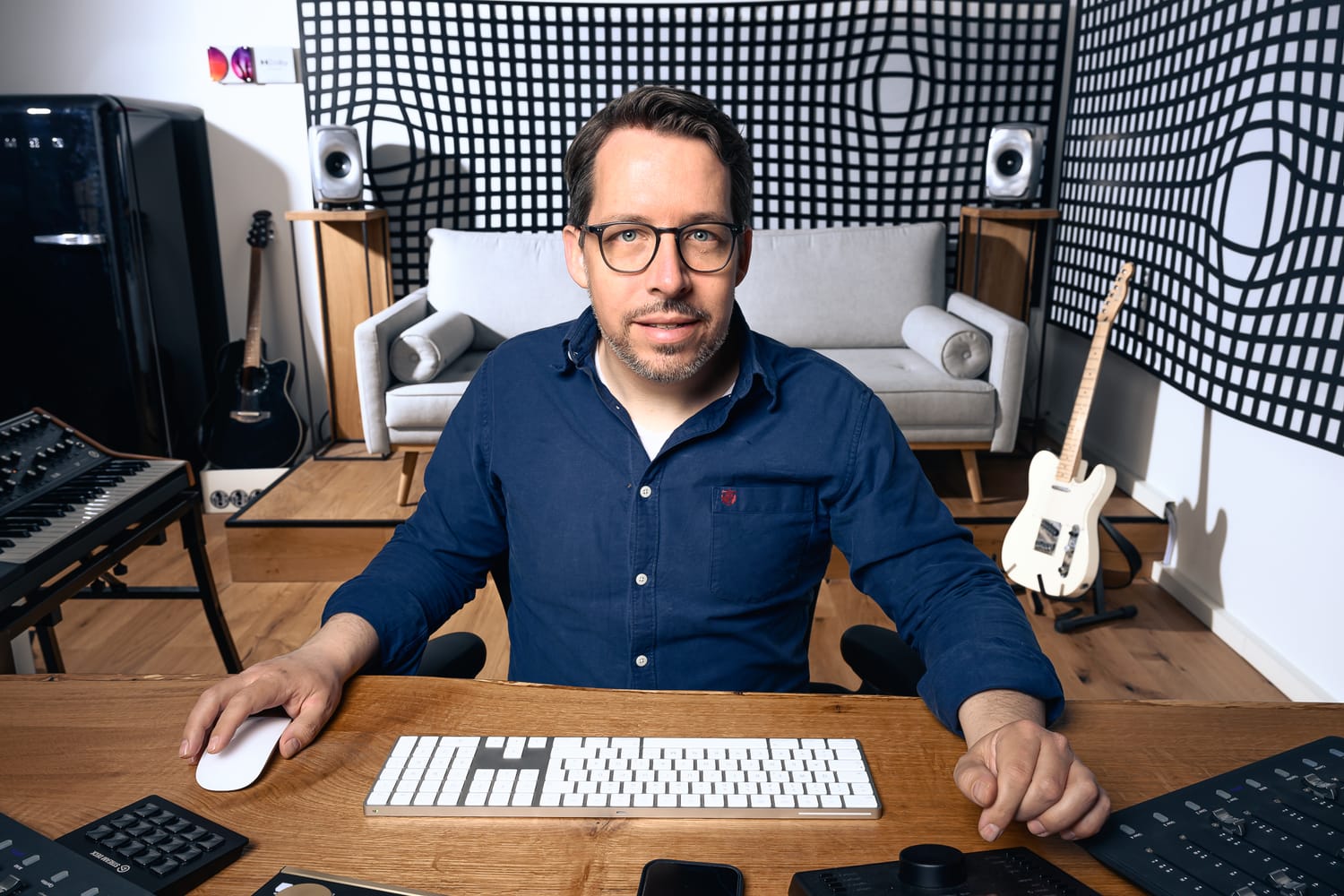
Connect the emotional arc of the song to the space around the listener.
Immersive music is not stereo with more loudspeakers. Spatial depth lets the listener step inside the production rather than observe it. Details that compete for space in stereo can breathe and become part of the musical environment.
Movement creates moments of ear candy and surprise. But movement alone doesn't make a mix immersive. If everything stays static, the mix never uses the expressive potential of the format. If everything moves constantly, the experience becomes distracting and loses its focus.
How space becomes part of the arrangement
“EASY PREY” by Moderat — the first major project I mixed with the Object-Bed workflow — begins relatively small, focused largely within the stereo image. Textures move subtly around the listener while backing vocals stay statically positioned in the surrounds. Then the chorus arrives and the mix opens up. When the second verse begins, the space becomes noticeably smaller again.
If the entire song occupied the maximum possible space from beginning to end, the chorus would have nowhere left to go.
- Smallwhen the music needs focus
- Widewhen the song needs impact
- In motionwhen the sound design invites exploration
The course covers pretty much every question I had when I first started working with immersive audio, combining technical knowledge with practical, real-world experience. Even after working professionally with Dolby Atmos for several years, I really enjoyed seeing Eric's approach and perspective. I genuinely wish a course like this had existed when I started out.
Sam Donalies3D Audio Engineer, River Studios Cologne
Your complete path through an Atmos production
40+ lessons across five modules. Around 20 hours of training. Recommended pace 4–6 weeks, entirely self-paced.
Understand Immersive Audio
How immersive formats developed, how human hearing localises sound, and how Dolby Atmos connects creation with real-world playback.
So you can make decisions based on understanding — not guesswork.
Build Your Monitoring and Studio Setup
Atmos-ready configurations, channel-based versus object-based audio, beds, objects, Renderers, speaker placement, monitoring geometry. Start on headphones, expand later.
So you can start with the equipment you have instead of waiting for the perfect studio.
Create a Professional Atmos Mix
Session preparation, Pro Tools and selected Logic Pro workflows, Object-Bed construction, upmixing, discrete objects, binaural metadata, immersive panning, reverbs, and session organisation — including my working template.
So you can take a song from prepared stems to a structured, intentional immersive mix.
Understand Binaural Translation
What binaural audio is, how HRTFs influence perception, and how to evaluate the headphone experience of your mix.
So you can make informed decisions about how the mix reaches listeners outside a studio.
Master, Check, Deliver, and Sell Your Work
Immersive mastering philosophy, Dolby Atmos loudness, deliverables, export, downmix compatibility, quality control, distribution, and professional positioning.
So you can finish the production confidently — not stop when the creative mix is over.
Downloadable professional templates
Start with a proven structure, understand why it works, adapt it. Everything you download stays yours after your access ends.
Real-world creative examples
How spatial scale, depth, static placement, and movement support a song's arrangement and emotional development.
Exclusive SAA student discounts
Student offers from selected spatial-audio developers, available to you inside the course.
Six months of community access
Exchange ideas with other engineers and producers as you develop your workflow.
Your completion certificate
Confirming your training in professional immersive music production. It stays valid after your membership ends.
Planned Tier 1 extension lessons
Released during your access period at no additional cost.
Who it's for
- Producers expanding from stereo into immersive production
- Mixing engineers receiving their first Atmos enquiries
- Engineers experimenting with Atmos but missing a coherent workflow
- Advanced students preparing for professional immersive work
- Studios expanding their services into immersive music
- Existing Atmos mixers looking for a different perspective or new tools
Who it isn't for
This is not a beginner course in audio engineering. I won't explain what a compressor does or teach you to operate your DAW from the beginning.
You should already understand the fundamentals of music production, know your DAW, and work confidently in stereo.
The focus is immersive music production — not film post-production. Demonstrations primarily use Pro Tools, with selected examples in Logic Pro. The underlying principles transfer to other Atmos-capable DAWs.
A coherent, practical, and professional introduction to Dolby Atmos mixing and mastering that holds a ton of value also for engineers already working in the field.
Freddy KnopMixing & Mastering Engineer, Berlin
Be ready when the next Atmos request arrives.
Dolby Atmos is still an optional service for many engineers. But more artists, labels, and clients are asking for it — and immersive audio is already expanding beyond music streaming into live performance, cultural installations, and automotive systems.
Learning Atmos doesn't only give you another deliverable. It changes how you think about stereo production. A session designed with immersive possibilities in mind becomes more structured, adaptable, and creatively inspiring — even when the immediate output is stereo.
According to Apple Music for Artists, Spatial Audio content receives a greater share of sound-recording royalties on Apple Music than content not available in Spatial Audio, at a rate of up to 10%.
When the next opportunity arrives, you can be ready to explore it — instead of outsourcing it, declining it, or advising the client against something you haven't had the confidence to offer.
Seven days to decide.
Work through the material. Open the templates. See how the workflow is actually built. If within seven days you decide the Academy isn't right for you, write to me and I'll refund your payment.
Build your professional Dolby Atmos workflow.
- 40+ lessons across five modules
- Approximately 20 hours of training
- My adaptable Object-Bed workflow
- Downloadable session templates — yours to keep
- Binaural translation strategies
- Immersive mastering, delivery, and QC
- Exclusive SAA student discounts
- Six months of community access
- Your completion certificate
one-time — or three monthly payments of €160
One Atmos project you no longer outsource can cover it. There is no automatic subscription: after six months, access simply ends. Anything you've downloaded remains yours.
Join the Spatial Audio AcademyImmediate access · No automatic renewal · 7-day guarantee
Questions
Do I need a full Dolby Atmos speaker studio?
No. You can begin with headphones and work through the entire program without a full loudspeaker setup. The Academy also teaches the principles behind professional monitoring, so you'll understand what matters when you're ready to upgrade.
Can I really learn Atmos on headphones?
Yes. Headphones let you build sessions, understand the complete production process, practise object placement and movement, and evaluate binaural rendering. The Academy also covers the limitations of headphone monitoring and how to make informed translation and quality-control decisions.
Do I need Pro Tools?
No. I primarily demonstrate the practical workflow in Pro Tools, with selected lessons in Logic Pro. The Academy is built around transferable concepts rather than button-by-button software instructions.
Is this suitable for complete beginners?
No. You should already understand stereo music production, know your DAW, and be familiar with the fundamentals of professional audio engineering. The Academy teaches you how to translate that knowledge into immersive music production.
I already have professional Atmos experience. Will I still benefit?
The fundamentals may be familiar, but experienced engineers can still gain from the Object-Bed workflow, session structure, creative upmixing techniques, specialised plugins, and mastering approach. Both Freddy Knop and Sam Donalies had prior professional experience and still found substantial value.
Will I be able to create a professional Atmos master after the course?
The Academy guides you through the entire process — setup, session preparation, creative mixing, mastering, quality control, export, and delivery. As with any professional discipline, your work will keep developing through practice. But you'll have a complete workflow and understand every stage required to finish and deliver an immersive production.
How long does it take, and how long do I have access?
Allow approximately 4–6 weeks. The course contains around 20 hours of video and is entirely self-paced. Your purchase includes six months of Academy and community access. After that, access ends automatically — there is no automatic charge. If you choose to continue, you can actively renew for €19 per month.
What happens to the templates after six months?
All downloadable templates and supporting assets you save during your access period remain yours. Your certificate also stays valid.
Are all 40+ lessons immediately available?
The complete Tier 1 curriculum includes more than 40 lessons across five modules. The core curriculum is available now. Additional planned Tier 1 extension lessons are produced and released over time and are included during your active access period at no extra cost. The course platform identifies which are available and which are scheduled.
Does Atmos make financial sense?
That depends on your clients, services, and business. Atmos is still optional in many parts of the industry, but enquiries are increasing. Being able to offer it lets you retain projects you might otherwise outsource or decline. For artists, Apple Music for Artists states that Spatial Audio content receives a greater share of sound-recording royalties than content not available in Spatial Audio, at a rate of up to 10%.
Can listeners actually experience Atmos without a specialised room?
Yes. Immersive music can be experienced across a growing range of headphones, personal devices, home systems, and compatible vehicles. The exact experience varies by playback device and rendering system — which is why binaural translation and quality control are part of the Academy.
Is there a guarantee?
Yes. Seven days. If you decide the Academy isn't right for you within that window, write to me and I'll refund your payment.
Are live calls included?
The Academy currently includes self-paced training and community access. Live calls are planned as a future addition but are not part of the current purchase.
The next Atmos request will come.
You can keep collecting disconnected tutorials and working through trial and error. Or you can build a complete professional workflow — one that takes you from session setup to a finished, quality-controlled immersive master.
I'll show you the technical structure, creative principles, and real-world practices I've developed since first working with Dolby Atmos in 2012 and refined across more than 1,400 immersive music mixes.
Build your Atmos workflow€450 once, or three monthly payments of €160 · Six months of access · 7-day guarantee
Immersive Lab UG (haftungsbeschränkt)
Alt-Buch 45–51, 13125 Berlin
Geschäftsführer: Eric Horstmann
Amtsgericht Berlin-Charlottenburg, HRB 240644 B
USt-IdNr.: DE352692810
Finanzamt Berlin Körperschaften II, Steuernummer 37/358/52124
hello@spatialaudio-academy.com